Reddam House Umhlanga Co-ed schooling: preparing students for the real world
ADVERTISEMENT
If schools are meant to prepare students for the real world, then they should reflect it as closely as possible.
In today’s world, the question is no longer whether co-educational schools have value, but rather how effectively they prepare students for the realities of life beyond the classroom.

Chad Moses, Executive Head of Reddam House Umhlanga
Having spent my entire career in co-educational environments – as a student, educator and school leader – I have seen first-hand the role these spaces play in shaping confident, capable young people. Quite simply, co-education reflects the world our students will enter. At university, in the workplace and in society at large, they will collaborate, communicate and build relationships across genders every day. Schools should mirror that reality.
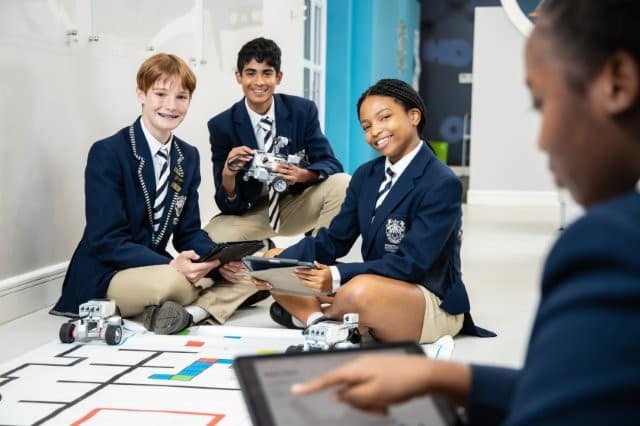
Reddam House Umhlanga students
Research supports what many educators observe in practice: students in co-educational environments tend to develop stronger communication skills, greater confidence in expressing their views, and a deeper respect for diverse perspectives. These are not “nice to have” attributes – they are essential life skills in a fast-changing, interconnected world.

Reddam House Umhlanga students
From a social development perspective, co-ed schools create opportunities for students to engage meaningfully with one another from an early age. These interactions build emotional intelligence and interpersonal awareness, helping young people to navigate complexity with empathy and maturity. Over time, what may initially feel unfamiliar becomes normal, and students learn to focus on the task at hand rather than the dynamics around them.
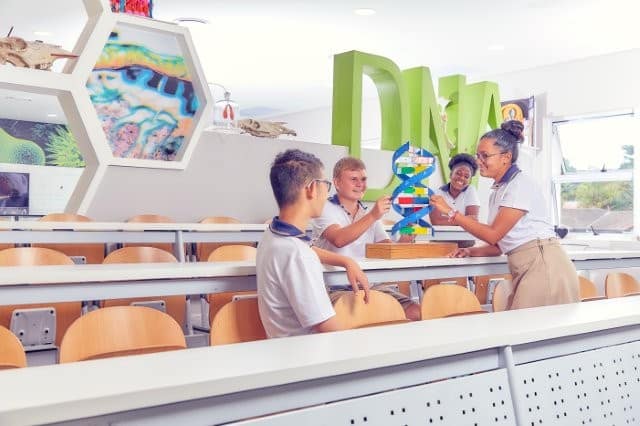
Reddam House Umhlanga students
There is often a perception that co-ed environments may be distracting. In reality, the opposite is frequently true. When students grow up learning alongside one another, those interactions become part of the everyday rhythm of school life. In many cases, this familiarity fosters a healthy sense of competition, encouraging students to challenge themselves and strive for excellence in a way that reflects the dynamics of the modern workplace.
Academically, the evidence is clear: co-educational schools perform just as strongly as single-sex schools. The differentiator is not gender composition, but the quality of teaching, the strength of the academic culture, and the extent to which each student is supported to reach their full potential.
What is particularly powerful in co-ed environments is the diversity of thought and learning styles within the classroom. When students are exposed to different ways of thinking, problem-solving and engaging, it enriches the learning experience for everyone. It also reinforces a key lesson – that there is no single way to succeed.
Perhaps most importantly, co-educational schools create spaces where students can feel comfortable being themselves. In diverse, inclusive environments, young people are more likely to develop a strong sense of identity and self-worth. This sense of belonging is critical, not only for academic success, but for long-term personal growth and wellbeing.

Chad Moses, Executive Head of Reddam House Umhlanga
As educators, our responsibility is not only to teach, but to prepare young people for the realities they will face beyond school. Co-education does not just support that goal — it accelerates it, shaping students who are confident, adaptable and ready to thrive in a world that does not exist in silos.
Notes and references
- OECD (PISA studies and related research): Indicates minimal consistent difference in academic outcomes between co-educational and single-sex schooling once socio-economic factors are controlled.
- American Psychological Association: Research highlights the role of mixed-gender environments in developing communication, social confidence and interpersonal skills.
- The Strategic Counsel (survey of 17,000+ students): Found that students in co-ed schools report greater confidence expressing their views and forming cross-gender friendships.

Studies published in journals such as Journal of Educational Psychology and Child Development: Show that regular cross-gender interaction supports collaboration, reduces novelty-driven distraction over time, and strengthens social competence